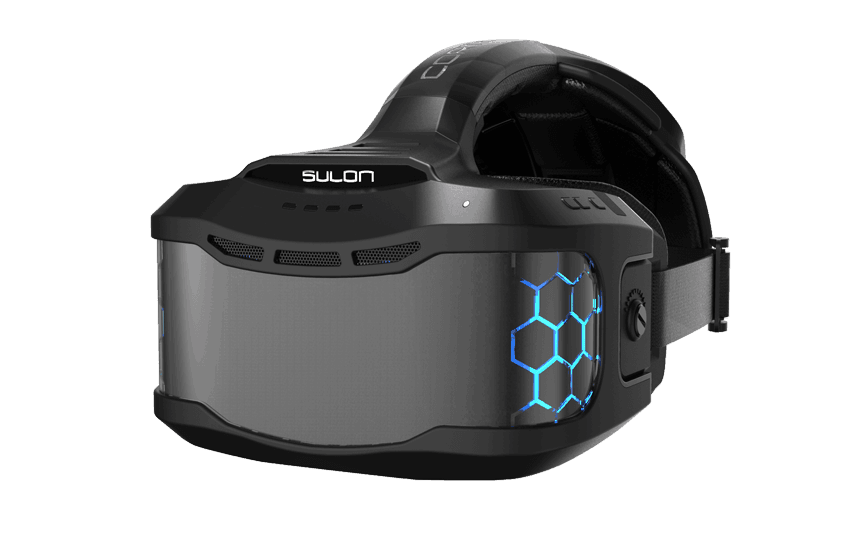








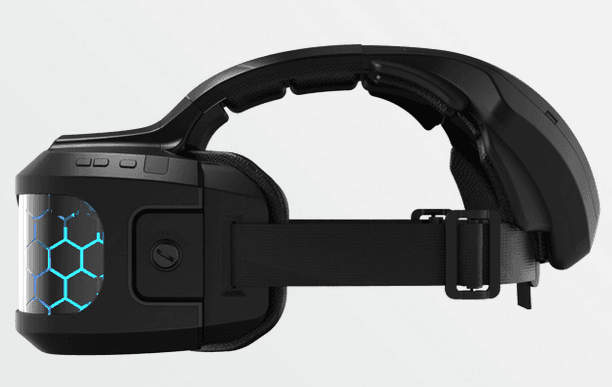
The Cortex VR headset aims to bridge the gap between virtual and augmented reality by combining both technologies into a single device. Developed by Sulon Technologies, the headset focuses on creating a more flexible and spatially aware experience.
At the core of the device are built-in 3D sensors and scanners that map the user’s surroundings in real time. This allows the system to integrate physical spaces directly into virtual environments. In practice, that means your living room can become part of the experience, with digital elements layered over real-world objects.
The concept bears some resemblance to the Microsoft HoloLens, although the Cortex leans more toward a hybrid approach. It can switch between a fully virtual environment and an augmented setup where the real world remains visible and interactive.
This opens up a range of possibilities. Furniture can be used as cover in a game, everyday objects can be transformed into interactive elements, and entire rooms can function as playable spaces. The system tracks movement and interaction using infrared sensors, comparable to the technology seen in Microsoft Kinect.
During a demonstration at CES 2015, the technology was shown in a practical scenario where users could assemble a virtual car engine within their physical environment. It’s an early example of how mixed reality could extend beyond entertainment into more functional applications.
At the time of writing, full technical specifications have not been disclosed. A development kit has been made available for pre-order at a price of $499, though a confirmed release window has yet to be announced.
More information can be found on the official website of Sulon Technologies.
You can find more info at http://sulontechnologies.com/.
